
If your pitched roof isn’t sufficiently insulated, you’ll soon find that your home starts to feel quite cold. The warmth rises and escapes through the roof, leaving you with no other option but to turn up the heating. As the warmer air moves upwards, your bills do too, and whilst this is inevitably concerning, the lack of insulation could also be causing problems with the structure of your roof.
Poor insulation in a pitched roof not only allows heat escape, but it also causes a rise in damp and mould, resulting in potentially long-term and expensive problems.
Luckily, it isn’t a lost cause. Installing a pitched roof from the inside will help keep the home warm, reduce the energy bills and minimise the potential for structural damage caused by damp and mould.
In this blog, we explore insulating your pitched roof from the inside and provide some insight as established roofing contractors in London.
Why insulate a pitched roof?
Insulating your pitched roof is certainly beneficial. You’ll find it leads to a warmer home, a reduction in energy bills and a more energy-efficient property. Some of the benefits of insulating your pitched roof include:
- A warmer home in the winter and a cooler home in the summer
- Reduced bills and improved energy efficiency
- Added protection for your pitched roof by reducing damp and structural damage
- Slows heat loss
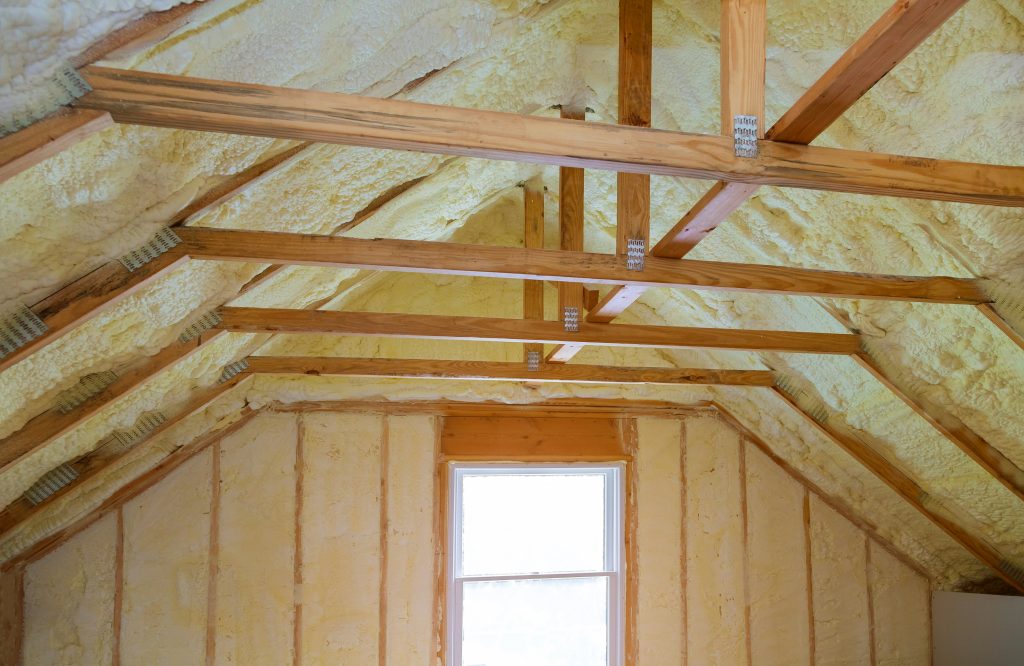
Insulating a pitched roof from the inside: Step by step
The following steps are what we would advise as the best way to insulate your pitched roof from the inside. If you are unsure whether this is something you can do yourself, speak to our team at London Property Services.
Clear the loft
Before you can even consider putting new insulation in your pitched roof, you’ll need to empty the loft. This includes any remaining insulation as well as the current contents of the loft. This gives you a great opportunity to inspect the condition of the roof structure. If you spot signs of damage or mould, or perhaps see sunlight peering through the roof, you may have additional issues to fix first.
Once the loft is empty and you’ve assessed the condition of the roof and the loft, gather the following:
- Tape measure
- Gloves
- Eye protection
- Saw
- Knife
- Stapler
Measure the rafters
Using your tape measure, measure the width and depth of each rafter space. As much as you may want to cut corners and calculate that all the rafters will be the same, it’s not a good idea. The gaps will likely vary in size, meaning that you’ll need different sizes of insulation for each section. Mark the insulation boards before cutting to give you the optimal fit.
Allow for air flow
We mentioned the impact of moisture and damp earlier, and this next step goes some way to eliminating that problem. By leaving a 50mm gap behind the insulation for air flow, moisture is prevented from damaging the timber.
Fit the insulation
With the insulation measured, use your saw or knife to cut the boards to the correct size. Push them between the rafters, ensuring they fit well with no gaps. The boards will need to be tightly fitted together if joining them. Then tape the joins to help keep them together and prevent moisture from getting in.
Attach the vapour control layer
With your stapler, fix a vapour control layer to the rafters. Overlap the sheets for maximum coverage and then tape the joints to prevent moisture from entering.
Cover the insulation
To maintain warmth and provide a neater finish to the loft, you can fix plasterboard over the insulation. You’ll need to make sure the boards are cut to size and fit tightly for optimal performance and appearance.
How much does it cost to insulate a pitched roof from the inside?
The cost for insulating a pitched roof on the inside will vary depending on the size of the property. It’s been estimated that insulating a detached house with a pitched roof in the UK will cost more than £1,000, and a terraced property may cost less than £900. Prices can vary significantly by area, supplier and of course, property size. As a result, it is advisable to get quotes from several suppliers or installers before proceeding.
How much will insulating my pitched roof save me on energy bills?
Like the cost for insulating your roof, the energy bill savings will vary based on the energy provider, the quality of the insulation and whether the insulation has been installed properly. You could save around £400 per year, but this figure should not be taken as a guaranteed saving.
What materials can I use to insulate my pitched roof from the inside?
There are a host of materials you could use to insulate your pitched roof. Each has its own benefits and drawbacks.
Fibreglass
Fibreglass is one of the more affordable options for pitched roof insulation. Easy to install and recyclable, and available as blankets or batts, it’s a great option if you aren’t keen on spending lots of money warming up your home.
Mineral wool
Mineral wool is a bit like fibreglass. It’s easy to install, sustainable and available as blankets or batts. It is normally a little more expensive than fibreglass. Can be fitted in between, above and below pitched roof rafters.
Corkboard
A more expensive option for pitched roof insulation, but one that provides incredible heat retention. Recyclable as well and sustainable in production, it’s a welcome option.
PIR board
These boards are cut to the desired length and fitted between the roof rafters. Excellent resistance against mould, moisture and flames, they are extremely popular for the impressive performance they deliver. However, unlike the other options we have mentioned here, they are not sustainable to produce and are not recyclable.
At London Property Services, we provide reliable, safe, compliant and effective pitched roof repair in London. Our fully qualified and experienced roofing specialists are on hand to help restore and install pitched roofs for both residential and commercial properties. Contact us today to find out more or book a repair.


