
Your roof and its condition are probably quite far from your thoughts. It’s there, it serves its purpose, and that’s about it. The saying out of sight, out of mind seems perfectly apt. However, your roof is perhaps one of the most vulnerable parts of a home, and its exposure to the elements and a lack of care can lead to expensive repairs.
In this blog, we cover a range of common roofing issues and provide guidance on how to address them, enabling you to save money and extend the lifespan of your roof.
How often should you inspect your roof?
The easiest way to keep repair costs down and keep your roof in optimal condition is to inspect it often. This allows you to catch problems before they get too severe. Ideally, you should inspect your roof at least twice a year. Checking it once in the autumn enables you to prepare for the potential bad weather and resolve any issues, and checking again in the spring helps you assess if any damage has occurred during the colder months.
That’s not to say you shouldn’t check during the summer or winter months. Some roof surfaces are susceptible to heat damage, and others may struggle with rain, ice or snow.
What should I check when inspecting my roof?
It’s important to check the interior and exterior of the roof. A small problem on the exterior that you ignore, or don’t see, could be causing huge problems on the inside.
On the outside
- Pooling water
- Cracked or missing tiles
- Broken, loose or misaligned guttering
- Excessive debris
- Moss or algae growth
On the inside
- Watermarks on the timber or insulation
- Signs of mould
- Sunlight coming through
- Visible signs of damage, decay
Spotting any of these issues early prevents problems from escalating. What could be a simple repair may become a safety risk and require a complete roof overhaul.
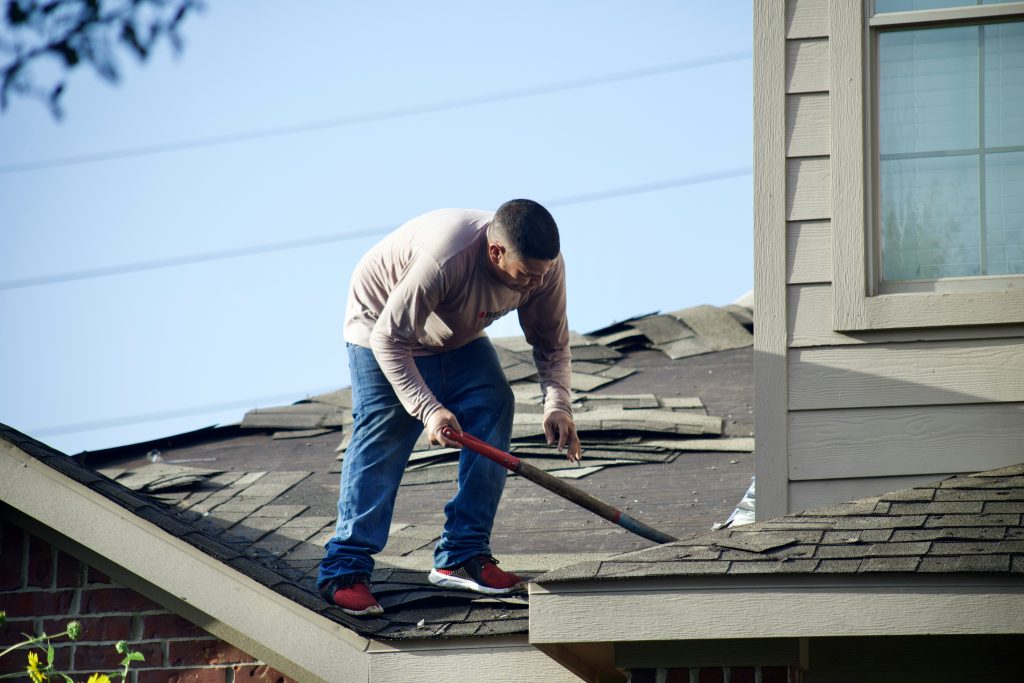
Easy roof maintenance tips
Our suggested roof maintenance can be conducted at any time of year. Some may require you to do them multiple times, while others may only need to be checked once a year.
Gutters and pipes
It can become very easy for your gutters to get blocked. Leaves, twigs and other debris can all sit in your gutter, blocking it and causing damage to both the walls and the roof. Ideally, gutters should be inspected twice a year for blockages and signs of damage. Clear the gutter of any blockages and then run water through it to make sure the gutter functions as it should. This also allows you to spot any leaks and cracks in it and address them before they get worse.
Moss and algae removal
Moss and algae can be like a poison to a roof surface. Over time, they eat away at the roof surface, weakening it considerably. You’ll normally find moss growing in shaded areas of the roof. When inspecting it, check the entire roof surface so you don’t miss any affected areas.
Using a soft broom or brush, you can remove the moss; just avoid pressure washers. The power from a pressure washer can be detrimental to the roof surface and lead to further damage. You can prevent further moss growth by cutting back overhanging tree branches. This reduces the amount of shade being cast on your roof and therefore minimises the potential for moss growth.
Loose and damaged roofing tiles
Your roofing tiles can be a gateway to plenty of problems if they aren’t inspected and repaired. With the potential for water or debris to get in, issues quickly escalate. From rotting structures to the potential for tiles to fall and cause harm, tiles must be checked whenever you are inspecting your roof. Any damaged or missing tiles should be replaced as soon as possible, and if you are unsure, always consult a specialist roofing contractor for pitched roof repairs.
Tiles can change from being in perfect condition one moment to damaged the next, especially during periods of bad weather. As a result, whenever there has been a storm or a prolonged period of wet and windy weather, check the condition of your roofing tiles immediately.
Flashings and seals
The flashing and seals of your roof can crack over time. This leads to leaks that may, initially, go unnoticed, but could cause significant damage to the walls and roofing structure. When inspecting your roof, look for bent, rusted or missing flashing and signs of peeling or broken sealant. You’ll be able to fix small problems with some plumbers’ tape and roof sealant, but areas that are badly damaged will need to be repaired by a roofing specialist.
Overhanging trees
We mentioned the impact of overhanging trees earlier and how their shading of the roof leads to an increase in the growth of moss or algae. This isn’t the only problem trees may cause. Branches hanging over your property can block gutters and damage roofing tiles. This could cause leaks, structural damage, and pose a safety risk if tiles become loose.
Cut back any branches that hang closer than two metres to the property and remove any loose leaves or tree debris that may be sitting on the roof or in the gutters. You should check this periodically, but always after strong winds and weather.
Ventilation and insulation
When inspecting your roof, remember that the inside is just as important as the outside. Where you may not notice problems on the outside, they may be causing big issues on the inside. Look for signs of damp, mould, watermarks or glimpses of daylight coming through. Have them repaired and then check your insulation for signs of damage. You may need to replace it in some areas.
Ventilation is just as important as insulation. By regulating the air temperature, you reduce the chances of condensation. Condensation can rapidly deteriorate the condition of the roof and, as a result, damage the insulation.
Roofing maintenance tips for all seasons
The weather in London, as we know, can be inconsistent, so whilst a check of your roof every six months is advised, changes in conditions may mean your inspections need to be more frequent.
We’ve already touched upon how inspections in autumn and spring are ideal, but checking in summer and winter is also beneficial. Below, we’ll explain why.
Winter roof maintenance
Winter is perhaps the most challenging season for your roof. The low temperatures, the rain, ice, and snow all ensure your roof endures a lot. Before winter sets in, clear the roof and gutter of any debris. Check for any signs of damage and address them immediately. Remember to cut back the trees, too.
Then move inside and check that the attic is sufficiently insulated. Stopping heat loss, or at least reducing it significantly, will minimise the chances of ice forming along the edge of your roof. Whilst adding or preparing the insulation, also look for water stains and other signs of damage. This will help show you where problems may be that couldn’t be seen too clearly from the outside.
Even if your roof is in perfect condition, the winter months can be debilitating. If snow falls and settles on the roof, gently rake it away to reduce the pressure on the roof surface and minimise the potential for damage to the surface.
Summer roof maintenance
Summer weather can be just as harsh on your roof as winter weather. The higher temperatures can cause tiles to curl and fade the roof. You might also find that animals choose to make gutters or gaps in the roof their new home. Whilst you may think you are supporting nature and giving the animals a safe place to live, you could be paying a hefty bill for their rent of your property. Over time, they will block the gutter with nesting materials and prey or damage your tiles as they try to alter their new accommodation to their tastes.
These roof maintenance tips, whilst sounding simple, are best conducted by a professional. The potential for a slip or trip on your roof could lead to fatal consequences, especially if you do not have the appropriate safety equipment. We have a team of experienced and qualified roofing experts across the city. LPS Direct – roofers in London, a name you can trust for all aspects of roof repairs and maintenance. Available to conduct gutter repairs in London as well as roof leak repairs and complete overhauls of flat and pitched roofs we are available now! Contact our team today to find out more.


